 Reviews



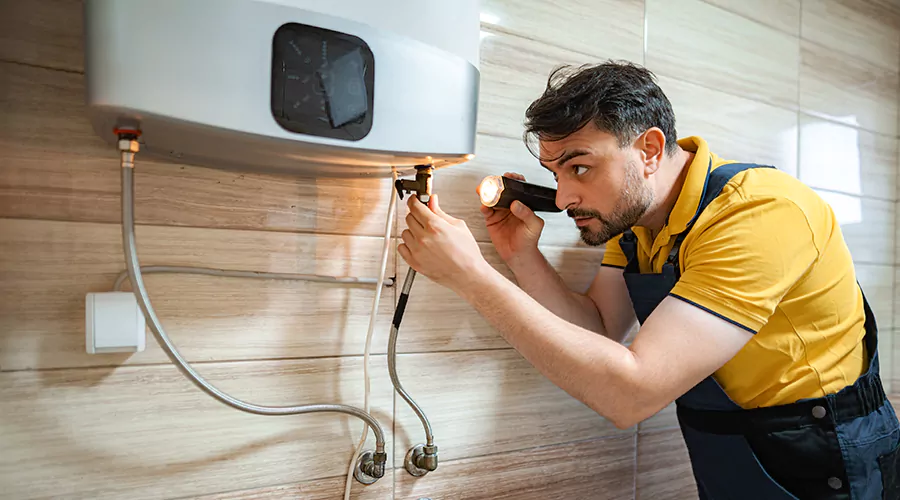
A hot water tank can leak because of a defective drain valve or damaged plumbing connection. However, water escaping directly from the storage vessel may indicate internal corrosion. Regular hot water tank maintenance can help identify developing issues before they become major leaks. A confirmed structural tank leak generally requires replacement rather than an ordinary plumbing repair. Tank-style water heater replacement costs 882–1,825 in the United States in 2026.
The most important distinction is whether the water comes from an external component or the storage tank itself. Water beneath the heater is not sufficient evidence of tank failure. A damaged connection near the top can allow water to travel down the appliance before collecting at its base.
What Causes a Hot Water Tank to Leak?
A storage water heater has several external components that can leak without affecting the tank's structural integrity.
However, the metal storage vessel can also deteriorate internally over time.
Possible causes include:
- A damaged drain valve.
- Loose inlet or outlet connections.
- Leakage around an upper fitting.
- Relief-valve discharge.
- A defective relief-valve connection.
- Condensation during certain operating conditions.
- Corrosion affecting the storage tank.
- Damage around a tank opening or seam.
A.O. Smith recommends inspecting other possible moisture sources before concluding that the storage vessel itself has failed.
The repair depends on identifying the actual source.
How Can You Tell Whether the Tank Itself Is Leaking?
An external connection leak may be repairable. A structural leak from the tank's pressure-containing body is different because the vessel itself has deteriorated.
Use these observations as initial clues.
| Observation | Possible Explanation | Next Step |
|---|---|---|
| Water around upper fitting | Connection leak | Identify the wet fitting |
| Dripping from lower drain valve | Valve problem | Inspect accessible exterior |
| Water from relief discharge pipe | Pressure or valve issue | Investigate discharge |
| Moisture during specific gas-heater operation | Possible condensation | Rule out other sources |
| Rust and water near tank seam | Possible structural damage | Keep heater isolated |
| Water emerging directly from tank body | Confirmed tank failure may be present | Professional evaluation |
Water accumulating at the bottom should be traced from above whenever it is safe to do so. The final puddle location is not always the source.
Why Does Internal Tank Corrosion Occur?
Most conventional storage water heaters use a steel tank protected by an internal lining and an anode rod. The anode rod gradually deteriorates while helping protect the storage vessel against corrosion. As the protective rod becomes depleted, the tank may become more vulnerable to internal deterioration. However, corrosion depends on several factors. Water chemistry and maintenance history can affect the rate of deterioration. A.O. Smith recommends inspecting the anode rod and replacing it when substantial deterioration is present. A damaged anode rod does not automatically prove that the tank has failed. However, corrosion accompanied by water escaping directly from the storage vessel is a more serious finding.
How Does Tank Leakage Progress?
A minor external drip can often be addressed before significant water damage develops.
Structural tank deterioration is different because continued corrosion can compromise the storage vessel.
| Problem Stage | Typical Symptoms | Possible Consequence | 2026 Cost Reference |
|---|---|---|---|
| Early external leak | Moisture around fitting | Localized water loss | May be repairable |
| Developing valve problem | Repeated dripping | Continued water accumulation | Depends on component |
| Suspected tank damage | Rust with unexplained moisture | Possible structural deterioration | Requires inspection |
| Confirmed tank leak | Water escapes from vessel | Replacement generally required | 882–1,825 |
| Extensive water damage | Water reaches building materials | Additional restoration | Separate cost |
Tank-style replacement averages approximately $1,347 according to Angi's July 2026 U.S. pricing data. The replacement cost may increase when installation requires changes to surrounding plumbing or the energy supply.
What Warning Signs Suggest the Tank Is Deteriorating?
An aging tank may develop several symptoms before a confirmed structural leak appears.
However, no single warning sign proves that internal corrosion has caused a leak.
Watch for these conditions:
- Repeated moisture around the heater.
- Rust forming near the tank base.
- Corrosion around tank openings.
- Rust-colored hot water.
- Persistent unusual heating noises.
- Reduced hot-water availability.
- A recurring puddle beneath the appliance.
- Water escaping from the tank's exterior.
- Several maintenance problems developing together.
- A confirmed structural leak.
Rust-colored water can also originate elsewhere in the plumbing system. Compare the hot and cold water before attributing discoloration to the storage tank.
Why Is My Hot Water Tank Leaking From the Bottom?
Water appearing at the bottom can originate from a damaged drain valve or another external component. A connection near the top may also leak and allow water to travel down the heater. Certain gas storage heaters can produce condensation during initial heating or under specific operating conditions. A.O. Smith explains that condensation occurs when moisture from combustion contacts sufficiently cool surfaces. This can create water around the appliance without a plumbing connection failure. However, persistent water should not be assumed to be condensation. If inspection confirms that water is escaping directly from the storage vessel, replacement is generally necessary.
Can the Drain Valve Cause Water Beneath the Tank?
A storage water heater normally has a drain valve near its lower section.This component allows water to be removed during appropriate maintenance. A damaged seal or deteriorated valve can allow water to drip.
Possible signs include:
- Moisture concentrated around the valve.
- Repeated dripping from its outlet.
- Mineral deposits near the connection.
- Leakage beginning after maintenance.
- Water collecting directly beneath the valve.
A damaged drain valve may be replaceable. However, replacement can involve draining the heater and handling potentially dangerous hot water. Do not attempt to remove a pressurized drain valve.
Can a Relief-Valve Problem Look Like Tank Failure?
Yes. A relief discharge pipe may terminate near the lower section of the heater. When the valve releases water, the resulting puddle can appear similar to a bottom leak. Repeated discharge can result from excessive pressure or thermal expansion inside a closed plumbing system. Bradford White identifies these conditions as possible causes of repeated relief-valve operation. The relief valve is a safety component. Never block its discharge pipe or attempt to stop the water with an improvised plug. The cause of the discharge must be investigated.
What Should You Do When the Tank Is Actively Leaking?
An active leak requires prompt attention because the storage tank contains a substantial volume of hot water.
When it is safe to do so:
- Keep people away from escaping hot water.
- Avoid wet electrical components.
- Turn off the heater's energy supply according to its instructions.
- Close the cold-water inlet valve when accessible.
- Keep the relief discharge pipe unobstructed.
- Avoid touching hot fittings.
- Observe the visible leak from a safe position.
- Arrange further inspection.
Do not restart an empty or partly drained electric storage heater. If you smell gas, leave the area and contact the appropriate emergency service or gas utility.
How Can You Perform a Safe Visual Inspection?
A homeowner can document accessible exterior conditions without dismantling the appliance. Begin only when the heater has been isolated and the area is safe.
Check the following:
- Visible inlet and outlet connections.
- Exterior areas surrounding the anode-rod opening.
- The relief-valve discharge pipe.
- The accessible drain valve.
- Water trails on the heater's exterior.
- Rust around visible tank openings.
- Moisture near the lower tank section.
- Nearby plumbing that may be leaking onto the heater.
Do not remove electrical covers or protective insulation. An inspection that cannot identify the source safely should stop before any pressurized connection is opened.
Should You Repair or Replace a Leaking Hot Water Tank?
The decision depends primarily on whether the storage vessel itself has failed. A leaking external fitting or replaceable valve may justify repair. A confirmed structural tank leak generally requires replacement. Age is another consideration, although it does not establish the cause of a particular leak. Rheem reports that many conventional storage heaters have a service life of approximately ten years. Its guidance recommends considering replacement planning as a heater approaches that age, particularly when other problems are developing. Warranty coverage and the condition of the existing installation can also affect the decision.
How Much Does Hot Water Tank Replacement Cost?
Replacement costs depend on tank capacity and installation requirements.
Angi's July 2026 U.S. figures provide the following estimates.
| Replacement Work | 2026 Cost |
|---|---|
| Tank-style heater replacement | 882–1,825 |
| Average replacement project | Approximately $1,347 |
| 40-gallon heater replacement | 800–2,300 |
| 50-gallon heater replacement | 800–2,500 |
| General professional heater repair | 228–1,017 |
Capacity-specific ranges include differences in equipment and installation costs. They should not be added to the general replacement range. Additional plumbing changes may increase the total.
When Should You Call a Professional?
Professional evaluation becomes necessary when structural tank damage is suspected or water continues escaping after the heater has been isolated.
Seek assistance when:
- Water appears to emerge directly from the storage vessel.
- Corrosion is extensive.
- A drain valve cannot be safely repaired.
- Relief-valve discharge continues.
- Water approaches electrical or gas components.
- The leak source remains uncertain.
- The surrounding property is experiencing water damage.
A technician can distinguish serviceable external components from a storage vessel that requires replacement.
How Can You Reduce the Risk of Tank Failure?
Regular maintenance can help identify conditions that contribute to premature deterioration.
Useful preventive measures include:
- Follow the manufacturer's tank-flushing schedule.
- Have the anode rod inspected when recommended.
- Investigate repeated relief-valve discharge.
- Address confirmed water-pressure problems.
- Check accessible fittings for corrosion.
- Keep the heater's surrounding area dry.
- Inspect for recurring moisture.
- Monitor changes in hot-water performance.
Routine care can help preserve a functioning tank. However, maintenance cannot reverse confirmed structural corrosion.
Conclusion
If your hot water tank is leaking, determine whether the water originates from an external component or the storage vessel itself. A drain valve or fitting may be repairable. Water emerging directly from a corroded tank indicates a more serious problem.
Shut down and isolate an actively leaking heater when safe. Do not attempt to patch a failed pressure vessel. Inspect accessible connections regularly and investigate unexplained moisture promptly.
Frequently Asked Questions
Can a leaking hot water tank be repaired?
External valves and connections may be repairable. A confirmed structural leak from the storage vessel generally requires replacement.
Does rust-colored water mean the tank is leaking?
Not necessarily. Discoloration can have several causes and should be investigated separately.
Why is water appearing beneath the heater?
The drain valve or an upper connection may be leaking. Condensation is another possible explanation.
Can a hot water tank fail before ten years?
Yes. Actual lifespan depends on water conditions and maintenance history.
Should I patch a leaking water heater tank?
No. Household patching materials cannot reliably restore a damaged pressurized storage vessel.